Category Archives: Model text-based lesson

HOMEWORK AS FLIPPED LEARNING, and CHECKING HOMEWORK

‘Flipped learning’ means getting to know the content of the next lesson at home in advance. This is what Finnish student do at home. We have found it an excellent thing for 50 years now.

So, one thing in foreign language teaching in Finland that has never changed even if new methods and ideas such as CLT have been introduced is what the students do at home:

Finnish students have always had to ‘translate’ or ‘study’ the textbook chapter of the next lesson in advance at home. It is a MUST. Much more important than having written exercises done.

The idea above may sound old-fashioned but the benefits are undeniable. There is no point in such a thing as working on a new chapter understanding half or even less of the content.

I have always first taught my students, especially if they are young, how the translation must take place in their minds . It is certainly worth a lesson or two. Usually there are always some students among 12 – 13-year-olds who learn this skill in groups for the first time in their lives. A good student is an ideal the ‘teacher’ in the group showing the others how the translation is done.

On some occasions doing a partial translation of the text into mother tongue can reveal massive gaps in the students’ reading comprehension. Even in some senior high classes some students have no idea how to translate the text. Remedial teaching for two weeks and they will get a hang of it. And then the foundation for learning is established. The final aim is to skip translation part at school altogether.

Reasons why advance home study / translations are vital

  1. First, there is no point in spending much time in the lesson checking the understanding of a text by translation into one’s mother tongue. Nevertheless, in the early stages of learning a new language translating the texts into the mother tongue is a must.
  2. Secondly, when we insist on the students doing the translation at home in peace and quiet at their own pace, precious time in lessons is saved for oral practices.
  3. Thirdly, as for the translation itself, the skill itself must not be taken for granted. It has to be taught separately since some students do not know how it should take place.
  4. To get started with translating a text the students have to know the meanings of the words in the chapter. In Finland we have always been lucky to have Finnish – English vocabulary lists for every chapter in the students’ workbooks. New words are introduced there and a lot of time is saved compared to using a dictionary every time a new word emerges in the text.
  5. What if the word is not in the word list or there is no such list available? We advise the students to consult a dictionary, a free one in the internet is the best option these days. The use of Google translator is an option too but it requires very little thought from the student’s part and deep-level learning suffers. Some modern electronic textbooks have an inbuilt dictionary as a quick tool.
  6. The best part in forcing the students to consult the wordlists is that by the time they have finished the ‘translation’ homework they will have done something with the new words half a dozen times learning them subconsciously. At least from English into their mother tongue.
  7. For the teacher it should not matter whether the translation is written in the notebook, translation of new words on top of the text lines or the student has the translation only in his/her head. As long as the student can promply give the translation in lesson, using a source or not, everything is ok.
  8. Once the translation skill has been learnt and the habit established less and less time in the lesson is spent on checking the understanding this way. It is taken for granted that the students have studied/translated the new chapter at home before the lesson.
  9. When the students come to class having studied the new text at home, they feel safe and confident. It is a long and boring lesson if they understand nothing of what is going on.

The foundation of every language lesson is studying or translating the new text beforehand at home (in the flipped learning style). It saves time and the students feel more confident in class.

CHECKING WRITTEN OR ORAL HOMEWORK

“Nothing new under the sun.” Not quite since my favourite, Number 2 Student-oriented checking of homework is very different from what I used at the beginning of my career.

When the lesson starts we tend to check the written and oral tasks that were part of the homework. This checking should not eat up too much of our time since the learning took place while the students were doing the exercises. Still, they need to know if their answers are correct or not and ideally this should also be a learning situation.

There are some ways to speed up the checking process and make it more efficient from the students’ point of view.

1 Teacher-oriented checking: The teacher does not get the answers at all from the students but correct answers are revealed little by little on the screen and the students quietly correct their mistakes. The teacher scrolls the text on the screen or he/she uses Power Point animations to hide the answers. Thus the teacher controls the time spent on each exercise. At the end the students are, of course, allowed to ask questions.

Of course, the old style ‘Checking written homework so that the teacher asks and one student at a time answers’ is also possible but it is more time-consuming.

2 Student-oriented checking: Each pair or group is given the correct answers on paper or on the screen and they do the checking themselves within the time given. What is good about this way of checking is that the students advise each other and checking becomes a learning situation too.

If this style is adapted, the teacher should tell the students why you are doing it and what the responsibilities of the students are. While the checking is going on the teacher has to go around the class to observe if someone’s homework is not done.

3 Checking can also be part of station work: If there are, for example, 5 stations/sets of tables, one can be devoted to checking homework. Station work or Work stations are effective as a special kind of group work. See how you can arrange a lesson like it.

N.B. Some teacher use a Google form where the students mark which of the exercises they have done. It is a public file within the class and the students easily point out if someone is trying to cheat. This file is also a document for the teacher and it can be taken into account when grades are given for the course.

The most important piece of homework: studying/translating the textbook chapter of the next lesson in advance at home.

  • 1 Studying the chapter at home in advance
  • 2 Checkingwritten or oral homework exercises
  • 3 Working orally on the new words of the next chapter
  • 4 Listening to the chapter on a CD, DVD, via the internet or read by the teacher
  • 5 Checking if the content was understood, clarifications
  • 6 Reading the text aloud
  • 7 Questions on the text, or multiple choice, true-false, black holes …
  • 8 Doing oral (and written exercises/underlining the text) in class

DEEPENING UNDERSTANDING, Part 2 and ADDITIONAL ORAL TASKS

In the previous article I suggested some alternative ways of making questions about a text. I also gave an example how to use differentiation in ‘question – answer technique’ so that the ambitious CLT principles are applied at least among some of the students.

UNDERLINING WORDS AND PHRASES IN THE TEXT

In the ‘old’ days I used a technique ‘Find me another way of saying’ to hammer in phrases like this:

T: Look at the text and find me another way of saying:”two weeks”.
S: “A fortnight”
T: “And then another ways of saying: “I did not have enough money in my wallet.”
S: “I was short of funds on me.”

This process is very slow and could be replaced by giving the students a ready-made list of para-phrases s that would be worth remembering. These stage I have relaced the whole thing in two ways: 1) The students underline anything they find worth underlining or I give a list like in example 3 below and the students say sentences where they use the phrases.

Now we have a look at some alternative ways to enhance talking in class and check understanding of a text. For the sake of motivation it is advisable to replace ‘question -answers’ with something else every now and then.

In short, the examples below demonstrate a way how to combine reading comprehension with speaking freely on the basis of the chapter.

TRUE – FALSE -tasks

The best thing about ‘True – False’ exercises is that it makes the students think and even better if they have to justify their choice in groups orally: argue convincingly why their choice is correct.

Here are some variations for ‘True – False’ -tasks

  1. Make all statements false, one word makes it false
  2. Make all statements false, part of the statement is wrong
  3. More statements are false than true and the students have to identify the false ones and justify why they are false
  4. Add a third choice ‘Not mentioned’, this choice is really demanding, both for the students and for the writer of the statements, this version can actually be considered to be ‘Multiple-choice’

MULTIPLE CHOICE EXERCISES

‘Multiple choice’ is an excellent way to check if a text has been understood properly. It is a very common exam task which gives reliable information of the students’ reading (and listening) skills.

If time allows, just like in ‘True – False’ tasks we can

  • give students individual time to make their choices and
  • then let them discuss the choices in pairs or groups; in English of course
  • This process will teach them a lot and they will learn from each other.
  • The discussion with others is in fact more important than the correct answers.

USING MIND MAPS

Sample 1

From CLT point of view mind maps are excellent because they give hints to the students what to talk about but offer no ready-made sentences to be used. The mind map above is a real communicative task for advanced students after they have studied a chapter with similar content.

Semi-communicative mind map would have additional key words like ‘classical, pop, rock, instrumental; guitar, piano, organ, flute, saxophone; painting, theatre, films, sculpture, poetry’ etc. to get the discussion going more smoothly. The best groups would probably realize how music is used in films to arouse feelings and that song lyrics are often poems.

A mechanical version of the mind map would have both words and guiding questions on the screen. Very often I have the mechanical version visible for everybody and tell the students to ignore my guiding if they feel like it. I call it invisible differentiation since the others do not actually know how much you use the guidance given.

SAMPLE 2

Source: Weilin+Göös, Course 2 Finland

In reality it does not matter how much the students consult the original text. We allow them to do it if they need the support. The main thing is that differentiation takes place unnoticed at the level of their choice.

SAMPLE 3

Source: Weilin+Göös, Course 2 Finland

In nearly all cases where we wish the students to discuss matters in groups it is advisable to have some ideas, pictures or lists or words/phrases that stirs imagination sufficiently. It is only natutal that some students work at a mechanical level and the best ones fully communicatively. Differentiation in action without any stigma on anyone.

USING PLOT PICTURES

Source: SIIE 7 WSOY, Finland

This is an example of how to replace questions made by the teacher with students explaining about the chapter. The topis is hobbies but in my opinion the CLT trick is not to ask the students to memorize and reproduce the content of the chapter, which is what the weakest students do by looking at the text since they are not at the level of making sentences of their own yet.

The trick is to ask the students to make up stories of their own on the basis of the pictures. And the ideas can be completely imaginary and different from the chapter content.

Once the students are allowed to produce stories of their own they really seem to enjoy the freedom and become very motivated to talk in class.

USING PICTURES TO ENHANCE SPEAKING

See my article on ‘Lexical approach to learning languages’. This picture, for example is linked with teaching grammar orally.

It is essential to realize that all language skills are interlinked and variety in classes can be reached by combining the skills.

Source: SIIE 7, WSOY Finland

Assuming the textbook chapter was about New York and Manhattan, the student make up a story of their own on the basis of these pictures.

ADDITIONAL TYPES OF ORAL EXERCISES

Now we have finally reached the last part of our text-based lesson: oral exercises which can be the ones in the study books or modified versions of them or any exercises that the teacher has found in other sources.

The types of tasks below are the juicy bits of our lessons. They bring joy and excitement into the class and are related to real life situations.

Having done with a chapter of two in the textbook these exercises hammer in orally what we were trying to learn. They work even with weak students if we provide them with supportive materials. And you can link them to any of the language skill areas we have in mind.

These exercises can be linked to

  • some new or old grammatical point, such as ‘explaining a process using the present passive voice’, ‘looking at photos and doing comparisons’ or interviewing others (Have you ever …? Has your mum often …?
  • a pre-task for the next lesson, such as ‘Find someone who’ -game where the answer is Yes or No and a certain grammatical point is repeated in a variety of ways
  • functions of language, such as ‘asking for directions’, ‘requesting politely’ or ‘giving a speech’
  • real-life situations, such as ‘at a hotel’, ‘at the airport’, ‘at a restaurant’ or ‘at the doctor’s’
  • a role play, such as ‘reporter – film star’, ‘politicians making a decision’ or ‘travel guide – tourists’
  • co-operative learning, an elaborative group work where the students move on to another group teaching others what they learnt in the previous group
  • work stations – technique, group work where the students move from one table to another and each table has a different task for them
  • task-based and inquiry-based learning, both are student-centered approaches where to focus is directed to finding information or answers to a problematic question, students use the foreign language in a natural way and it does not feel like a language lesson at all

These oral exercise types will be dealt with in other articles.

DEEP LEVEL READING, returning the marked example test

Returning an exam or any test at school should be a vital learning situation. Learning from mistakes is best if the students tell each other how they realized what they are doing wrong and what they need to do next.

This article is continuation to the previous article and I strongly recommend a student-centred way of returning the marked reading comprehension tests to the students. There are four reasons for doing it this way:

  • The student will learn how and why they missed the right answer. And they are given the time and a chance to voice their ideas in peace.
  • The students realize how the others solved the problems they faced while doing the test.
  • Many students close their ears when the teacher’s explanations go on and on.
  • The group leaders are finally rewarded for their social skills and it enhances their self-esteem.

My recommendations for the lesson

  1. Divide the class into groups of 3 – 4 and make a good student responsible for the discussion in each group. However, warn these leaders not to lecture about the correct answers but give the answers only if the group cannot find them.
  2. Neither should the leaders show the answer sheet to the others. If they do immature students will simply copy the answers and the whole learning situation is spoilt.
  3. Giving the star students this task will enhance their social skills and they will not get bored and besides, we learn best when we teach others.
  4. Give the students the handout with my tips on the strategies to be used in reading texts. The ones mentioned in the previous article. Let the groups discuss the ideas for a few minutes.
  5. Return the exam papers to the students. Let the group members go through the exam quickly by just looking at their own exams. What went wrong and why? What was the logic like they followed? What did they succeed in? Which strategies would have been useful?
  6. Now the group will go through the whole exam and the leader will make questions, ask for justifications and encourage the others to think aloud why they missed the point. This process of discussion is actually more important than giving the correct answers.
  7. You may consider whether you are going to give the ‘correct’ answers to the group leaders just like they are below or a simplified version of them without the justification lines. A hard-working group may be rewarded with the answers after the whole lesson so that they can study the exam in peace and quiet at home.
  8. If it is absolutely necessary, the discussion may take place in the mother tongue. It makes no sense to go through the answers in English if the proficiency level of the students is not high enough.
  9. Finally answer any questions the students may still have and give feedback of the work of the groups. Praise the groups that worked well and speak in general terms of the problems you observed. The students will know if you are talking about their group.
  10. The very last thing: Ask for feedback, the students’ opinion of the project, the lessons spent on the strategies. Useful or not? What their liked and disliked? What could be done differently and how?

School buses belonging to some schools in Nairobi

Suggested answers for the reading comprehension test

Making a Difference in Tanzania

Up to 113 million children worldwide do not have access to school books. What a waste it is that old school text books are binned or pulped. Books written in Arabic will, of course, be
of no use in most of Africa but
English is an official language in Tanzania, for example. Moreover, all secondary education is done in English there and children are taught following the old British O- and A-Level curricula. Due to the way syllabi in Tanzania mirror the old English system, second-hand course books are perfect to help bridge the gap between rich and poor nations.

Words to be guessed; access = a chance to get, to bin = throw to rubbish bin, to pulp = turn to paper, recycle, curricula/syllabi = official school plans

The title of the article suggests that a problem is being solved. It implies a change.
The topic of the article, the main idea, is given in the very first sentence.
The photograph has a white person in the middle which forebodes him as the person who solved the issue in this primitive-looking school.
The predictions concerning the content of the article are connected to school life.
The thesis statement,(main argument) is given at the end of the 1st paragraph.

1. In Tanzania there are 113 million children without school books. F, because 113 is a worldwide figure

2. In Tanzania all education starting from the first school years is done in English. F, English is used from secondary school onwards

3. The curricula in Tanzania follow the old English model to a great extent. T, British O- and A-level traditions are followed

In Tanzania educational resources are scarce but children have the will to learn. An organisation based in Liverpool is working hard to see that school text books and other equipment are collected and re-distributed. The Tanzanian Book Appeal would be nothing without the help and support of schools, many of which have been involved in fundraising activities as well as donating old books. John, one of the students involved in the project, says that before the fundraising he didn’t really know or even care about Tanzania. Now he understands that Tanzania is the fourth poorest country in the world, and that there may be up to 40 pupils sharing one text book.

Rare words to be ‘guessed’: resources = equipment and money, scare = seldom seen, redistribute = spread out again to people, donate = give out free

The topic sentence of paragraph 2 is the very first sentence.
Why should someone take all the trouble? >>The children do not have enough books to learn new things.
The rest of the text explains what has been done and why.

The 2nd paragraph title could be: School involvement

The last sentence wraps up the idea of the 1st sentence: Tanzania is really poor.

4. In Tanzania there is not a lot of money to organize teaching. T, Tanzania has scare resources = no funds = not much money

5. An organization in Liverpool gathers secondhand school books and forwards them to Tanzania. T, the organization is ‘Tanzanian Book Appeal’ and the students and schools only help them

The whole procedure is planned in detail and even the Tanzanian officials are involved. (This topic sentence is added here to make the text more coherent.) Once the books have been donated they are collected in a truck and taken to a holding warehouse – which was donated by a local business – sorted through and stored. They will be packed up and shipped off to Tanzania in a big container.
The students who have worked on the project will then fly out to meet the books over there. The government in Tanzania have loaned government vehicles to sort out the distribution. The group of English students and teachers will then tour the schools in the Kagera region near Lake Victoria.

The original text has no topic sentence in Paragraph 3.

The whole text is a chronological account of the book handling procedure, explaining how the project was carried out.

Paragraph 3 could be titled as Practical actions taken.

If you get a feeling that the ending is missing you are right. The original text is much longer.

No hard words in this paragraph.

6. The aid organization does not need the help of school children in its work. F, the organization needs the children in fund raising, with donations and even in Tanzania

7. In Tanzania there may be as many as 40 pupils in one classroom. F, the class size is not even mentioned and might even be bigger, 40 refers to the number of students who have to share a book

B  Answer the multiple choice questions

8. What happens to the school books once they leave the donating schools?

  • a) They remain in an old lorry until a storage warehouse is found.
  • b) They are sent to Tanzania in small units with goods from local businesses.
  • c) The books that have been given away are taken into storage and sorted. OK, the books are sorted out before they are placed in a container in Britain

9. What happens to the books when they reach Tanzania?

  • a) A group of students from England will go and distribute the books in Tanzania. OK, they fly over but there are some teachers involved too
  • b) The school have to pay for the transportation of the books.
  • c) The British students travel on the trucks to the schools.

C  1 Why are British secondhand school books ideal for Tanzanian schools? (Give 2 reasons and answer in your own words in a full sentence or two.)

The language of secondary schools is English so they also need English books. The subjects and everything else is pretty much the way it is in Britain.

2 What do you think about the procedures of getting the books to schools after they have arrived in Tanzania? (Mention 2 opinions and why you think so.)

It shows that the project is taken seriously since even the school authorities and the government are involved. They want to secure the safe arrival of the books in their destinations so that they do not end up in the black market, for example.

LISTENING

Listening used to be considered a ‘passive’ skill for a long time, which is a completely false idea. To understand a foreign language when it is spoken one has to be active and master a lot of things.

Teachers used to consider listening a ‘passive’ skill for a long time since the listener was thought to do nothing actively. Now we, of course realize, that this idea was completely false and the listeners have to master a lot of things when they decode the original message trying to understand what was meant. In this article I will deal with …

  • Language-related skills in listening
  • How messages are decoded in our minds
  • Practical advice, tips and strategies on how listening skills can be improved

The other topics in this unit are

ListeningCLT-type listening tasks, free time listening
Listening, a historical view
Listening strategies in exams
N.B. See also ‘Model text-based lesson’ – listening

Even the language skill terminology has changed over the years: speaking and writing are now called ‘productive’ skills and listening and reading ‘receptive’ skills (instead of ‘active’ and ‘passive’ skills.)

Student-centred methods done the way I recommend in my article ‘The structure of a textbook-based lesson’ automatically lead to the development of listening skills thanks to the ample use of recordings and emphasis on oral activities as well as the versatile repetition of the vocabulary and content.

There are two layers in listening comprehension which operate simultaneously: the first one is related to language skills and the other one to decoding the message. The first one can be taught but the second one only indirectly.

To understand spoken language the listener has to …

  • know the meaning and pronunciation of words and phrases; this is the most important thing since the combination of words and gestures often tells us what the essence of the message is
  • know grammatical rules (at least subconsciously) and how to use language in situations; knowing grammar is often vital but in simple situations we understand the message because of the words without any knowledge of grammar, (these first two items are known also as bottom-up strategy)
  • be able to take intonation into account; especially in everyday speech intonation reveals how the words are to be interpreted, sometimes intonation gives you a completely opposite meaning to the utterance (sarcasm)
  • get used to different accents of English; English is spoken in many different ways in the English-speaking world and depending on our needs we have to get used to them

Most of the language-related matters above can be taught but the message decoding takes place in the heads of the individual listeners and we have no direct access to the processes of minds. Nobody in this world can actually explain what happens in our brains when we interpret messages. Therefore decoding the messages can be taught only indirectly. See the 16 tips and strategies below.

Decoding spoken messages

By decoding we mean the mental process in the listener’s head when he/she tries to figure out what the message is.

The listener has to …

  • be able to make conclusions or inferences on the basis of what he/she hears
  • make use of general background knowledge about the situation and context (known also as top-down strategy)
  • know many ways of saying the same thing since the same idea and message can be expressed in very many ways
  • indicate to the speaker that he/she understood the message by responding to what was said

Listening comprehension is a vital skill and it is integrated with many other language skills. In lessons much of the listening practice takes place when students speak in groups. If speaking is neglected, listening suffers too.

Practical advice, tips and strategies on how listening skills can be improved

  1. Listening does not develop unless we keep on practising it all the time at school. Encourage your students to listen to English sources in their free time. Listening is part of nearly every lesson when we connect with speaking. The internet is full of recorded English-speaking materials.
  2. Make sure your students study the chapters in advance at home. When they understand the text, listening gets much easier. Reading the text aloud and talking about it improves understanding as well.
  3. For beginners the teacher is the most important source of listening practice. Later on it is textbook recordings and authentic materials with various accents.
  4. Some students prefer to close their eyes when listening to the text because it helps them to concentrate. Others need to look at the text or the exam bookletIall the time.
  5. Group work done in English automatically means a lot of speaking and listening. One should not underestimate the importance of the oral practice between students.
  6. Beginners need a lot of support from the teacher. It all starts in recognizing sounds and words and moving on to phrases and longer sentences and finally dialogues and whole texts.
  7. In my junior high lessons we listen to the whole text first, check if we understand it and then listen to it again sentence by sentence and repeat the sentence after me or mimic the recording.
  8. Reading texts aloud and in groups enhances listening skills as well. Our brains need every kind of listening practice that is possible.
  9. Senior high chapters may be up to two pages long and my advice is to divide them at least in two parts. Senior high students listen to long texts in parts only once and read some part, usually about 20 lines anywhere in the text, without a model. The discussion between students that follows is to be seen as listening comprehension as well.
  10. With your permission, some students might benefit from recording the listening and reading part of the lesson on their phone. Thus they would be able to practise listening at home too.
  11. Having listened to the text the student have a good understanding of the text and they can move on to talk about the text.
  12. Publishers recordings are mostly excellent in quality and they should be made use of in lessons. Listening to natives speakers in recordings as a model for speaking is a must.
  13. Difficulties in listening may be due to a variety of reasons: lack of knowledge of words, grammar or pronunciation, untrained ears to recognize sounds or weak forms or the strategies in listening are poor. Listening skills will not improve until the problems are identified and a remedy found.
  14. In pair and group work the students should be encouraged to ask the others to repeat what was said if they did not understand. “Sorry, it did not catch what you said. Can you repeat it please!” “Please, can you clarify what you said.” “I missed that. What did you say.” “I’m not quite sure what you mean.”
  15. Listening requires a massive amount of practice and input. In ordinary lessons the listening takes place without pressure if the students have studied the chapter at home. Reading aloud hammers in the messages.
  16. Listening comprehension exams are another matter and they deserve another article since there are many listening strategies that we can teach our students to reduce stress and get better results.

Luckily native speakers have a natural tendency to try to understand foreigners even if their language is awful and faulty.

I have already touched upon these matters in my article ‘Pre-task, Listening and clarifying content’. It is part of the unit where I discuss ‘The structure of a textbook-based lesson’.

The topics of the next three articles on listening are

  • CLT-type listening tasks, free time listening
  • Listening, a historical view
  • Listening strategies in an exam

TASK-BASED LEARNING, At the airport

I am using ‘At the airport’ as an example of a situation-based real-life TBL lesson.

For many students this may be the best English lesson ever, the only time in their lives someone gives them practical information on airports.

From the teacher’s point of view this example may seen complicated but when you have gone it through once with your students, you can repeat the stages for the rest of your career.

This lesson may be one of the most useful English lessons the students ever take.

The structure of an airport situation could run as follows: Time 2*40 min

  1. First of all, at its best TBL tasks are an extension of a text or dialogue which was dealt with in the class. The textbook chapter offering new vocabulary and ideas serves as a pre-task for the actual TBL task.
  2. If there is no suitable text available, the teacher can find one in other sources. Use Google to find both texts and even educational videos on what happens at the airports.
  3. Watch Youtube videos on airport situations (what happens at each counter etc). The aim is to have a motivating relaxed atmosphere, with no fear to speak.
  4. Next the students read aloud similar situations in written dialogues provided by the teacher. Memorizing useful phrases and vocabulary. The students can consult the dialogues all through the lesson if they want to.
  5. We must start with the idea that many students have never flown and have very little knowledge of what happens at an airport. Many others have flown but paid little attention to the order of doing things, for example. They just followed their parents and that is it.
  6. So, having now learnt some basic vocabulary we now make a random list of all the various places one needs to go through at an airport: customs, information desk, lounge, gate, security control, passport control, check-in desk, arrivals, departure, duty-free shop etc..
  7. The students work in groups and put the places in the ‘correct’ order and justify their choices in their groups. Finally the teacher reveals the ‘correct order’ on the screen.
  8. The students work in pairs telling each other what happens at an airport terminal. They are given a handout with key words.
  9. The classroom is turned into an airport with desks in the right order and signs on the desks too. Half of the class goes into the corridor and they get ‘an electronic flight ticket’ and ‘passport’.
  10. The other half remains in the classroom and they become ‘airport officials’ who work at different desks. They are given questions related to the desk but they can also ask questions of their own.
  11. Low-achievers can use the prompt questions provided by the teacher: Why does the photo not look like you? What is the purpose of your visit? Where are you staying in Tokyo? etc.
  12. All ‘passengers’ go through the airport until they arrive at their gate. Then the roles are switched and the same thing is done again. The officials turn to passengers and vice versa.
  13. Finally the desks are put aside and ‘an airplane’ is created using the chairs and the students hear all the announcements typical of an airplane before the take-off and landing. The announcements are on the screen and the students have to explain them again using their own words mimicking the measures to be taken.
  14. The very last thing is to go through the immigration desks and the customs (EU-citizens, non-EU citizens, red and green line)
  15. Feedback session: The students get into groups for a while and then give feedback to the teacher on the lesson. The teacher gives general constructive feedback to the whole class. The teacher can ‘secretly’ pay attention to the level of fluency of the students while the roleplay is on but no official assessment should take place unless the students know about it. Self-assessment with clear criteria might be the best option.

Later on I hope to be able to attach a video on these stages to give a better ideas of what happens in practice. This is much more complex than arranging a situation ‘at a restaurant’ or a ‘walking tour in hometown’ but when you have done it once you can do the very same thing over and over again with the same materials

THE STRUCTURE OF A TEXTBOOK-BASED LESSON

Most of our English or any language lessons are based on a textbook and a particular chapter in it. So, are we using those lessons wisely?

If students do not learn to communicate having attended these lessons for many years, then there is something wrong with the lessons and the procedures in the class.

This is the mystery I am trying to find an answer for!

In the articles under this topic I am going to recommend a specific logical order of dealing with any textbook chapters. This approach is based on student-centered CLT practices, and authentic materials are often utilized in the final products and class presentations.

Some linguistic researchers argue, “We should use authentic materials in lessons.” In principle I agree but not fully in practice.

I think authentic materials are at their best when a topic area in the textbook is covered and we have an inquiry-based or a task-based project coming up, for example. They are the kind of lessons that do not require much preparation on the teachers part since there are always plenty of sources available in the internet.

Let’s now focus on ordinary lessons based on textbook chapters.

  • The following articles are meant for those teachers who wish to apply Communicative Language Teaching, CLT, principles in ordinary lessons but do not quite know how to do it.
  • My goal is to suggest a specific order of doing things in a CLT class so that the students work in pairs or groups and the teacher mainly organizes the activities, facilitates learning.
  • However, if you go back to the main menu you will discover that at present there are about 80 additional articles on how to apply communicative language teaching (CLT) principles in teaching vocabulary, grammar, listening , speaking, writing and reading. And how to control classes and how to assess the students.

Some arguments on using textbooks

  1. We should use authentic materials not ‘artificial’ texts. Yes, I agree in principle but not fully in practice. The truth is that we teachers simply do not have enough time to modify authentic texts to suit the needs of our pupils/students. I have tried it many times but working without textbooks is simply too troublesome. However, what I recommend are group projects with authentic texts after certain chapters/topics in the textbook. In these cases the students will be looking for information in authentic internet sources and occasionally library books.
  2. Textbook chapters are boring. I don’t agree. At least here in Finland our textbooks and all materials related to them are of excellent quality and a lot of thought has been put in making them interesting and suitable for the age group.
  3. Internet texts increase motivation. Yes, I agree. Encouraging students to search for information in English in the Internet is a great asset for us teachers. If it becomes a permanent habit, the students easily read much more texts this way than ever at school.

An ideal order in dealing with a text?

Most of our language lessons are based on a textbook and a particular chapter in it. Right? Does it matter what we do with the chapter and in which order? I think it does. And I even think it is the key to learning communicative language teaching, CLT, methology in class.

I am going to recommend a specific logical order of doing things resulting in student-centered methods, teaching and learning.

Below you will find the basic components/stages of a typical Finnish language lesson but the order of components has been mixed on purpose.

  • A. Underlining the text. Doing oral activities or written exercises in class
  • B. Studying the chapter at home in advance
  • C. Reading the text aloud
  • D. Listening to the chapter recording
  • E. Working orally on the new words of the chapter
  • F. Checking if the content was understood / clarifications
  • G. Questions on the text, or multiple choice, true-false, black hole tasks
  • H. Checking written and oral homework exercises

Are they the components you have in your lessons? Do you wish to add or take something away? Which order of steps would make sense in your lessons and appeal to you? Or does it matter at all? You can check my recommended order towards the end of this article.

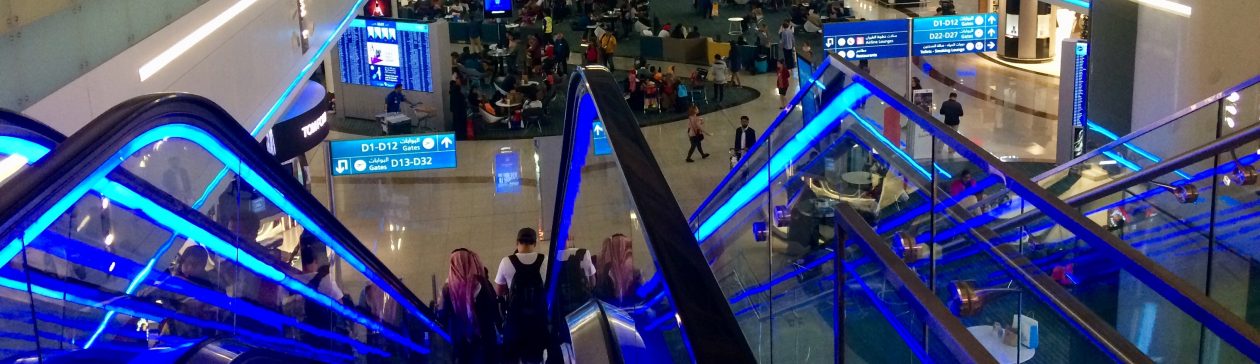
A school is like an airport. If it is well-organized, logically designed and everyone knows what they are doing, it is bound to succeed. If not, a chaos will follow.

At a modern airport everything is carefully thought out. Read every ‘airport’ as ‘school’ and see if my parallel works.

  • people come on time to a particular area of the airport
  • they go through the sections in a particular order because it has been found logical and guarantees passenger safety
  • they also leave the airport following exactly the procedure set for them
  • there is concensus among the staff on what is done at an airport: safety and efficiency dictate the measures to be taken
  • airport experts decide what is and must be done in every section
  • the people who work at the airport have worked out the whole system but they can make changes if some new ideas seem to make sense
  • there is no place at an airport for messing around: personal safety must be secured and the chance someone causes confusion or a delay of a flight must be minimized

Language lessons are places for learning new things and skills, not just the new language. The discussion below opens up the issue: “Where do you place yourself in the axel of traditional and CLT approaches in language classess?”

A school that works like an efficient airport is a safe and enjoyable place to work for all parties.

It may seem odd that anyone should suggest a particular order for a chapter-based language lesson but what follows is based on an experience of many decades. In my opinion there have to be justified reasons and a logical order in doing things in class.

Therefore the ideas presented in the following articles might be worth trying or at least considering. On the other hand, objections and counter-arguments are always welcome. There is never one correct way of doing things.

One of the basic ideas is that the younger the pupils are, the more they need the teacher and his/her support. The amount of independent pair and group work increases year after year in junior high. The final aim in senior high is to have students who know how to study effectively alone, in pairs and groups and know how to develop and assess their learning in all skill areas.

Every now and then in my 42 years of teaching English my senior high students became admiringly independent and all I had to do was to organize the activities of the lessons in advance and open the door to the classroom for them. I was free to help any students who needed individual guidance and the class was clearly enjoying the work, mostly in pairs or groups. Reaching excellent results!

Then again, there were many groups were only some individuals reached independence – but still these very same CLT principles worked in class.

Oh, yes of course. You want to know my ‘correct’ order of doing things in class.

When I changed my style of teaching in 1986 I wanted to find ways how all the things below could be accomplished by the students themselves. My conclusion was that ‘opening the classroom door’ was the only thing the students could not do. Yes, I had the key. BUT At the same time I found the keys to the CLT style of teaching English.

  • 1 Studying the chapter at home in advance
  • 2 Checking written and oral homework exercises (in pairs or groups)
  • 3 Working orally on the new words of the next chapter
  • 4 Listening to the chapter on a CD, DVD, via the internet or read by the teacher
  • 5 Checking if the content was understood, clarifications
  • 6 Reading the text aloud (having understood what the text is all about)
  • 7 Questions on the text, or multiple choice, true-false, black hole tasks
  • 8 Underlining the text. Doing oral activities or written exercises in class

I will discuss the justifications for this order in the next articles. In addition at present there are more than 80 articles on how to apply CLT principles in teaching vocabulary, grammar, listening , speaking, writing and reading. And how to control classes and how to assess the students.

Summary on the ideas to be discussed in the next articles

T = Teacher, Sts = Students, numbers refer to stages 1-8 of the lesson above, the green colour indicates my favourites style

Teacher-centred lessonStudent-centred CLT lesson
1 T insists on the Sts translating the new chapter at home, no guidence how to do it. Or no ‘translation’ work is required at home.1 T insists on the Sts translating the new chapter at home and teaches how to do it when he/she starts with a new class.
2 Homework is always checked the same way: T asks and Sts answer, one at a time and the others listen. 2 Homework is checked in many ways preferrably in pairs or groups, it is also a learning situation.
3 No attention is paid to the new words, T jumps straight to the new text.3 The translation work at home is revised by working on the new vocab orally in pairs or groups.
4 The chapter is listened to in full.4 Sts can even listen to the text via Internet at home and may ask for clarifications after school listening of the chapter.
5 T asks the Sts to translate the text, sentence by sentence, done by taking turns everyone together.5 The class is divided into groups where some Sts skip translation altogether or lead the groups, others translate the whole text, the rest only parts of the text; So, differentiation steps in!
6 The text is read aloud after the teacher or another source, sentence by sentence.6 Five ways of reading the text; beginners using breath groups, advanced students without a model alone or in groups.
7 T asks questions on the text and the Sts answer them one St at a time while the others are listening. Nothing else happens. Only mechanical repetition of the text. No real communicative action. No other ways to test comprehension.7 T shows the questions on the screen and some Sts answer them to their pair, others skip the questions and tell the content in their own words, the rest talk about the topic of the chapter in general. SO, differentiation again!
Many other ways to check comprehension.
8 The teacher tells what to underline in the text. Very few mechanical oral exercises, mechanical written tasks are favoured, checked with the T.8 Most exercises are oral and done in pairs or groups, differentiation is made use of and the Sts are free to make their choices and underline whatever they want.
Sorry, not many things I like now even if I used them 40 years ago.All these ideas are elaborated in my other articles.

PRE-TASK, LISTENING and CLARIFYING CONTENT

PRE-TASK: THE CHAPTER VOCABULARY

So far I have argued in favour of the students getting to know the chapter content at home and checking the written homework in a time-saving manner. Checking homework should preferrably take place in groups the right answers being on the screen or on a handout. This way the students can help each other with their explanations.

Many teachers are in the habit of having ‘warmers’ or ‘icebreakers’ when the homework has been checked. It is a good idea if there is a real language learning point in doing so.

As a language teacher I am extremely jealous of time. I tend to measure the outcome in my mind compared with the time we spend on the warmer. Therefore I often allow my students to work on the new vocabulary for a few minutes.

We have dealt with 1 and 2 already and now we will have a look at stages 3, 4 and 5.

  • 1 Studying the chapter at home in advance
  • 2 Checking written or oral homework exercises
  • 3 Working orally on the new words of the next chapter
  • 4 Listening to the chapter on a CD, DVD, via the internet or read by the teacher
  • 5 Checking if the content was understood, clarifications
  • 6 Reading the text aloud
  • 7 Questions on the text, or multiple choice, true-false, black hole tasks
  • 8 Doing oral activities or written exercises in class

Having dealt with 1 and 2 the next stage in my lessons is to work on the vocabulary of the next text even before we do anything else. Why?

  1. First, working on the vocabulary of the chapter reminds the students of the content of the text.
  2. Secondly, the pronunciation of the new words is learnt if the words are repeated after the teacher. Looking at the words in the list helps students to memorize how the words are written.
  3. Linguists argue that on average something must be done with a new word 20 times before it is learnt. The students have seen and done things with the words maybe 5 times at home and now we must intensify the learning more in class.
  4. After repeating the words after the teacher, student pairs have options: a) ask each other the words (mother tongue – English OR vice versa), b) give definitions or descriptions of the words and the pair finds the words in the lists, c) orally, students use the words in sentences of their own, d) the best students take turns in making up a story where they use as many of the words from the word list as possible.
  5. This stage of the lesson usually takes only 5 – 6 minutes and those minutes are certainly not the worst minutes of the lesson.
  6. When students start forming their own sentences, the others automatically practise listening skills and give feedback if the sentences do not make sense. After one minute you can see smiles on the faces of the students who tend to make up humorous and mysterious stories.
  7. When feelings are involved in learning, things are learnt more effectively. Humour and laughter are good medicines!

LISTENING TO THE CHAPTER RECORDING

Great listening skills are a result of a lot of input during the lessons: teacher talking, playing recordings or students talking and listening to others.

The next step is to listen to the recorded version of the Chapter. Why? Firstly, because it gives the students a chance to check one more time if there is something in the text they do not understand. Secondly, listening provides a model for pronounciation and intonation of the text. Thirdly, ears need to be trained for the characteristics of the foreign language.

Why listening at this point? Why before reading aloud? Simply because there is no point in reading a text that you do not fully understand. In addition a model is needed for pronunciation. Neither is there a point in doing exercises on a chapter if it is not understood. The text is in almost every case listened to everyone together.

  1. Listening is an important skill and it does not develop unless we keep on practising it at school as well. That is why listening should be part of nearly all lessons.
  2. In most countries we are lucky to have native speakers who speak authentic English for us to listen to in the textbook recordings. Sometimes the recordings are even produced abroad. It does not really matter which accent is used since students need to get used to different versions of English anyway.
  3. Difficulties in listening may be due to a variety of reasons but I will deal with them in more detail under title ‘Listening’.
  4. If there is a lot of speaking in class, it means a lot of listening. Even if the speakers are students still learning the language, one should not underestimate the importance of the practice between students.
  5. Under title ‘Pronunciation’ I argue that good pronunciation is best learnt by mimicking / copying what the students hear. Still, some sounds, weak forms and intonation may require explaining and special training. Listening to native speakers as a model for speaking is a must.
  6. Beginners need a lot of support from the teacher who may be the most significant source of English they hear and listen to.
  7. Publishers recordings are mostly excellent in quality and they should be made use of in lessons. Junior high texts are usually rather short and can be listened to as a whole. Senior high chapters may be up to two pages long and my advice is to divide them into at least two parts.
  8. In my junior high lessons we listen to the text, check if we understand it and then listen to it again sentence by sentence and repeat the sentence mimicking the recording.
  9. Senior high students listen to the text in parts only once and read some part, usually about 20 lines anywhere in the text, without a model.
  10. Having listened to the text the student have a good understanding of the text and they can move on to talk about the text.

CHECKING UNDERSTANDING OF THE TEXT AND ASKING FOR CLARIFICATIONS

In short, at this stage of the lesson it should be quite clear to the students how well they understand the text. They have studied the text at home, done oral vocab exercises on it and listened to the text.

Still, we need to give the students one more time to ask us to explain any unclear parts of the text or let them present something they wonder about the text.

Teacher: “Is there anything in the text you still do not understand or wonder about? Words, phrases, grammar, anything?

Usually we people are unwilling to admit that we do not understand something and therefore it is vital that we present the idea of asking for clarifications in a positive light not to embarrass the students. No-one is to be humiliated no matter what they ask. Sometimes the teachers have to keep up a real poker-face: “Thank you, Jim. That was an interesting question.”

When I try to ‘sell’ the idea above to my students I say:

There are no stupid questions. If you are wondering about something, there are certainly others who are wondering about the same thing. And it is my job to give you an answer. If I don’t have one, I will find out.

In fact there are three options how to deal with clarifications / translations. This is the moment differentiation steps in during the lesson.

  1. Ask the students to translate the whole text into their mother tongue, with the teacher or in groups where a good student is checking the work. This is advisable with beginners no matter what age they are.
  2. Only the difficult parts are translated with the teacher or in groups. The rest of the text is supposed to be a piece of cake as for understanding. This is the case with intermediate students whose level the teacher knows well.
  3. No translation at all, unless the students ask some part of the text to be clarified.

The principle: The final aim is to have as little translation into the mother tongue as possible since it tends to eat up too much time.

DEEPENING UNDERSTANDING DIFFERENTIATION, Part 1

Answering questions about a text is not a true CLT activity because the answers can be found in the text. Communivative use of language requires that the language is produced by the students themselves.

Still, ‘question – answer’ approach can be very useful. For some students it is as far as they can get – but I have witnessed a lot of miracles among students. They stop worrying about mistakes and throw in words and make a real effort to get their message through.

Let’s move on in our list of ‘Things to do in class’. I will first expand the ‘question-answer’ technique and show at the end of the article how to replace it, at least occasionally, with differentiation tasks.

  1. The students have studied the chapter at home in advance
  2. We have checked homework exercises
  3. We have worked orally on the new words of the next chapter
  4. We have listened to the chapter and checked understanding of the text
  5. We have read the text or a part of it aloud
  6. NOW we have to deepen our understanding of the text, and use differentiation
  7. Doing oral activities, written exercises or underlining text in class
  1. First of all, up to this point there have been many stages where the teacher has been the organizer and initiator of class activities. In my opinion this is the way it should be: time is saved, the students are active and the teacher is as much as possible in the role of a CLT teacher, an organizer and facilitator of learning
  2. Linguists sometimes call this kind of text-based lesson ‘a closed system’ because the students are tied to the texts. However, in CLT activities we aim at using ‘an open system’ which ideally means that the students use language and ideas of their own.
  3. In my logic this is the only way that makes sense because I do not want to throw my students into water until I know they can swim. In other words, the students must master the vocabulary, structures, phrases and some basic ideas about a new topic before they are able and can be allowed to talk freely.
  4. One thing we teachers need to realize is that we do not make the questions about the text because we need information. No, since we already know the answers. This realization leads to the idea that we should use question – answer or any other approach as a way towards free talking. Asking questions from one student at a time does not make sense here. Everyone should be made talk and be active.
  5. After reading the text aloud the students can be permitted to talk about the text freely. But can they all do it? The answer is NO, not all. So what are we teachers supposed to do? Use differentiation; i.e. every one of the students chooses one of the 3 tasks and works with others who took the same level task.
  6. If you want to make the questions on the text yourself (since you have no time for differentiation) you can
  • A) usually we simply ask the questions and they are not visible, BUT now have the questions on the screen and read them from there (serving auditive and visual learners, developing reading and listening at the same time)
  • B) the funny option: ask all the students to answer the questions aloud at the same time (sounds crazy but 100 % activity level) You, poker-faced!
  • C) ask the students to work in pairs, (50 % of the class is active), the best option

Differentiation in ‘question-answer technique’

I assume just about all teachers use ‘question – answer technique’ but I hope not in the traditional manner. In Finland we used to have student streaming up to the mid 1980s, i.e. dividing the students into three proficiency levels with different goals. When the system was abolished, we only had mixed-ability classes and teachers were obliged to use differentiation in their lessons. Nevertheless, I kept the idea of three levels of streaming when I was trying to differentiate my teaching in class. But I let the students choose the level and change it as they pleased.

This is what I started to do in the mid-1980s at this stage of the lesson.

I gave three options to my students, they choose one task and find other who chose the same task and start working according to my instructions on the screen or in a handout.

They were completely free to choose A, B or C, even make a mixture of them if they wanted. They were only limited by time, 10 – 15 minutes.

Holiday resorts appeal to people everywhere, Shangri La close to Muscat, Oman.

For example, having dealt with the basics with a text (not here) the students would choose A, B or C. If you have a weak class, you may tell them to start with A and move to B and C if they have time.

A Look at the text about the summer holiday trip of the Hills, work in pairs and answer the questions orally taking turns.

When did the Hills start their holiday? (Lines 1 – 3) How did they get to Greece? (Lines 4 – 7) What kind of plans did they have for the holiday? (Lines 8 – 13) etc. Simple questions for beginners and weak students, answers can be found in the text, if encouraged the students can give answers in their own words. Why- and How do we know that -questions make the task a bit more demanding. Who, when, where, how, what … like, whose -questions are the easy ones since you can answer

B Look at the text about the summer holiday trip of the Hills, work in pairs and explain in your own words what happened in their holiday. You can make up things that are not mentioned in the text at all. Your story does not have to be true. Here are some key words: holiday, plan, London, train, flight, airport, hotel

C If you are not very interested in the Hill family’s holiday, explain about the best holiday trip your family has made. The foundation for the free talk is laid at the beginning of the lesson and the best students can easily do C.

The teacher remains in the background and does not interfere with the tasks unless the students ask him/her something. Neither do we correct any of the mistakes publicly even if we hear them. If we start doing that, the students become hesitant and finally stop talking in the fear of making a fool of themselves. The students do not make mistakes on purpose and besides, we can take notes on the mistakes and come back to them later on without pointing at any individuals.

You may think “Well, sounds reasonable enough but I do not have time to write the instructions.” But believe me, it only takes a few minutes and it is all worth the trouble when you see the smiles on the students faces. Besides, you can ask good students to take turns making up similar exercises for you. You will be surprised!

If you never or rarely get beyond the ‘traditional ‘questions – answers’ stage, you do not give your students a chance to speak freely, which is one of our final aims in CLT classes.

The next article deals with alternative ways of checking the level of understanding the text and how to turn the focus to talking in class.

SAMPLE EXAM FOR READING COMPREHENSION

One of the keys to the students’ success and improvement in reading comprehension exams is to devote a couple of lessons to the strategies when you get a new group.

Throwing the students one exam after another and assuming that massive input will automatically improve the reading skills for an exam, does not necessarily hold true.

In the previous articles I hopefully gave a lot of food for thought about preparing the students for exams.

All language skills are intertwined. Thus many of the tips given on listening comprehension, writing tasks and learning vocabulary apply in taking reading comprehension exams too.

The text below is a sample exam for those who are about 15 years of age. The idea is to let them take the exam either before or after the strategies lessons. The exam has A) True/False-questions, B) multiple choice questions and C) a task combining reading with writing and justifying opinions.

The next article after this one is an example on how a mature 16-year-old might be able to process this exam. I will also give the ‘correct answers’ there with some recommendations on how to organize the return of the ‘test’.

I believe that if the students are allowed to use and apply the strategies handout in doing this exam they will internalize the ideas more profoundly. I am talking about the handout and articles in the previous article. And the student may become better writers too since they will learn to anticipate the reactions of their readers better.

Still, learning to apply the strategies does not take place over night. It also requires a lot of practice.

Let’s look at the exam now.

https://asanteafrica.wordpress.com/2010/11/12/matt-suskis-impressions-from-a-school-in-tanzania/

Making a difference in Tanzania

Up to 113 million children worldwide do not have access to school books. What a waste it is that old school text books are binned or pulped. Books written in Arabic will, of course, be of no use in most of Africa but English is an official language in Tanzania, for example. Moreover, all secondary education is done in English there and children are taught following the old British O- and A-Level curricula. Due to the way syllabi in Tanzania mirror the old English system, second-hand course books are perfect to help bridge the gap between rich and poor nations.

In Tanzania educational resources are scarce but children have the will to learn. An organisation based in Liverpool is working hard to see that school text books and other equipment are collected and re-distributed. The Tanzanian Book Appeal would be nothing without the help and support of schools, many of which have been involved in fund raising activities as well as donating old books. John, one of the students involved in the project, says that before the fund raising he didn’t really know or even care about Tanzania. Now he understands that Tanzania is the fourth poorest country in the world, and that there may be up to 40 pupils sharing one text book.

Once the books have been donated they are collected in a truck and taken to a holding warehouse – which was donated by a local business – sorted through and stored. They will be packed up and shipped off to Tanzania in a big container. The students who have worked on the project will then fly out to meet the books over there. The government in Tanzania have loaned government vehicles to sort out the distribution. The group of English students and teachers will then tour the schools in the Kagera region near Lake Victoria.

A  Decide whether the statement is true (T) or false (F). Correct the false statements.

  1. In Tanzania there are 113 million children without school books.
  2. In Tanzania all education starting from the first school years is done in English .
  3. The curricula in Tanzania follow the old English model to a great extent.
  4. In Tanzania there is not a lot of money to organize teaching.
  5. An organization in Liverpool gathers secondhand school books and forwards them to Tanzania.
  6. The aid organization does not need the help of school children in its work.
  7. In Tanzania there may be as many as 40 pupils in one classroom.

B  Answer the multiple choice questions. Choose a) b) or c)

8. What happens to the school books once they leave the donating schools?

  • a) They remain in an old lorry until a storage warehouse is found.
  • b) They are sent to Tanzania in small units with goods from local businesses.
  • c) The books that have been given away are taken into storage and sorted in Britain.

9. What happens to the books when they reach Tanzania?

  • a) A group of students from England will go and distribute the books in Tanzania.
  • b) The schools have to pay for the transportation of the books.
  • c) The British students travel on the trucks to the schools.

C  1 Why are British secondhand school books ideal for Tanzanian schools? (Give 3 reasons and answer in your own words in a full sentence or two.)

2 What do you think about the procedures of getting the books to schools after they have arrived in Tanzania? (Mention 3 opinions and why you think so.)

The ‘correct’ answers with detailed analysis are to be found in the next article.

Africa at its best. Karin Blixen’s home near Nairobi. Blixen wrote famous books about her life in Africa.

Before you look at my next article about returning this sample exam, please ponder on the questions below.

How would you organize immediate student-oriented feedback after a reading comprehension test? Background info: The test was 30 min long, 6 multiple choice questions and 4 open-ended ones. A mixed-ability class, 16-year-olds and onwards.

  1. What would you say to the students about the purpose of the exam-returning session?
  2. How do you organize the feedback session right after the test?
  3. Grouping the students? Making it a student-centred learning situation?
  4. How to provide a model how to approach the questions?
  5. How to deal with multiple choices?
  6. How to answer open-ended questions?
  7. When do you give the correct answers and to whom?
  8. Various options to deal with low-achievers, i.e. How do you deal with differentiation?