
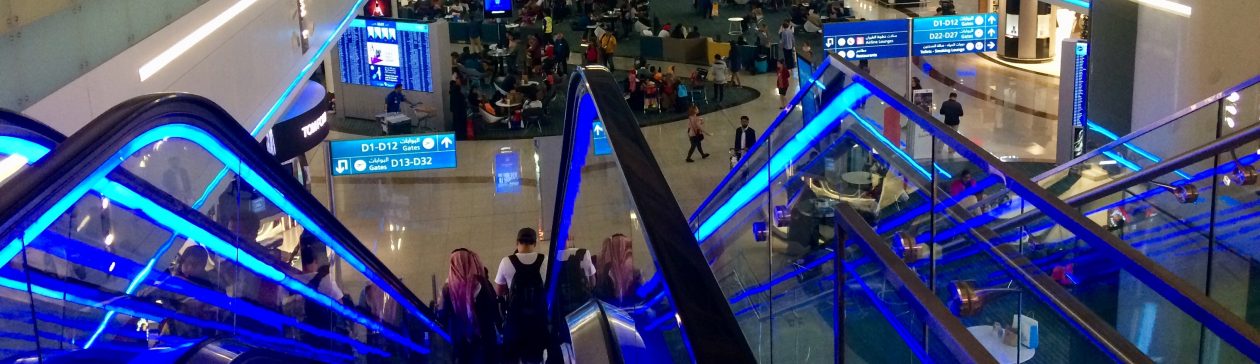


I am using ‘At the airport’ as an example of a situation-based real-life TBL lesson.
For many students this may be the best English lesson ever, the only time in their lives someone gives them practical information on airports.
From the teacher’s point of view this example may seen complicated but when you have gone it through once with your students, you can repeat the stages for the rest of your career.


The structure of an airport situation could run as follows: Time 2*40 min
- First of all, at its best TBL tasks are an extension of a text or dialogue which was dealt with in the class. The textbook chapter offering new vocabulary and ideas serves as a pre-task for the actual TBL task.
- If there is no suitable text available, the teacher can find one in other sources. Use Google to find both texts and even educational videos on what happens at the airports.
- Watch Youtube videos on airport situations (what happens at each counter etc). The aim is to have a motivating relaxed atmosphere, with no fear to speak.
- Next the students read aloud similar situations in written dialogues provided by the teacher. Memorizing useful phrases and vocabulary. The students can consult the dialogues all through the lesson if they want to.
- We must start with the idea that many students have never flown and have very little knowledge of what happens at an airport. Many others have flown but paid little attention to the order of doing things, for example. They just followed their parents and that is it.
- So, having now learnt some basic vocabulary we now make a random list of all the various places one needs to go through at an airport: customs, information desk, lounge, gate, security control, passport control, check-in desk, arrivals, departure, duty-free shop etc..
- The students work in groups and put the places in the ‘correct’ order and justify their choices in their groups. Finally the teacher reveals the ‘correct order’ on the screen.
- The students work in pairs telling each other what happens at an airport terminal. They are given a handout with key words.
- The classroom is turned into an airport with desks in the right order and signs on the desks too. Half of the class goes into the corridor and they get ‘an electronic flight ticket’ and ‘passport’.
- The other half remains in the classroom and they become ‘airport officials’ who work at different desks. They are given questions related to the desk but they can also ask questions of their own.
- Low-achievers can use the prompt questions provided by the teacher: Why does the photo not look like you? What is the purpose of your visit? Where are you staying in Tokyo? etc.
- All ‘passengers’ go through the airport until they arrive at their gate. Then the roles are switched and the same thing is done again. The officials turn to passengers and vice versa.
- Finally the desks are put aside and ‘an airplane’ is created using the chairs and the students hear all the announcements typical of an airplane before the take-off and landing. The announcements are on the screen and the students have to explain them again using their own words mimicking the measures to be taken.
- The very last thing is to go through the immigration desks and the customs (EU-citizens, non-EU citizens, red and green line)
- Feedback session: The students get into groups for a while and then give feedback to the teacher on the lesson. The teacher gives general constructive feedback to the whole class. The teacher can ‘secretly’ pay attention to the level of fluency of the students while the roleplay is on but no official assessment should take place unless the students know about it. Self-assessment with clear criteria might be the best option.
Later on I hope to be able to attach a video on these stages to give a better ideas of what happens in practice. This is much more complex than arranging a situation ‘at a restaurant’ or a ‘walking tour in hometown’ but when you have done it once you can do the very same thing over and over again with the same materials